
First Eye Center
We promise
your bright eyes.
Enhance safety, Less surgery time

Presbyopia · Cataract
Presbyopia and cataracts usually occur together with age.
The root cause of presbyopia and cataracts is a
malfunction of the lens, and cataracts and presbyopia
can be treated with surgery.
Your precious eyes,
Who can be held responsible?

 In case of normal looking

 In case of can’t see small
letters at close range
What is presbyopia?
As we get older, the function of the lens deteriorates, making it difficult to see nearby objects.
As we age, the elasticity of the lens decreases and the strength of the ciliary muscles that control the thickness of the lens also decreases, which reduces the eye's ability to focus and switch. Discomfort increases primarily when looking at close objects, such as books, cell phones, and monitors. Even people who originally had nearsightedness and had difficulty seeing far away with glasses may find that they can see clearly in the distance but have difficulty seeing up close. The phenomenon of having to remove glasses to see clearly is also due to presbyopia.

Presbyopia
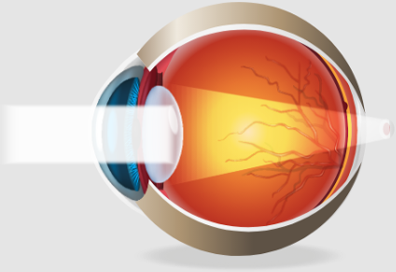
As we age, the function of the lens deteriorates,
making it difficult to see nearby objects.
What is a cataract?
When the transparent lens of the eye, similar to a camera lens, becomes cloudy, vision becomes foggy
and objects appear unclear, regardless of distance..
As the lens hardens and becomes cloudy, light cannot pass through properly, which can lead to blurry
vision, decreased vision, double vision when looking through one eye, glare, and night blindness,
which makes it difficult to see in bright light.
Types of Cataracts
 Cataracts
- Genetics
- Chromosomal Abnormalities
- Inborn Errors of Metabolic Disorders
- Maternal Medications and Infections
 Age-related
- Traumatic
- Diabetic
- Medications (steroids, antidepressants)
- Intraocular Diseases (uveitis, retinal dystrophy)
- Sunlight (UV rays), X-rays, Excimer laser, Nutritional deficiencies
Cataracts
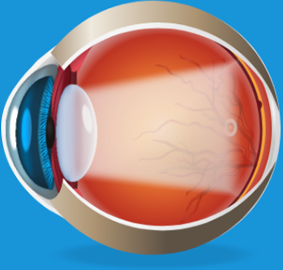
Vision appears foggy and objects
appear unclear, regardless of distance.

Could I also have
presbyopia and cataracts?
Check your symptoms and current condition at First Eye Center.
Timing of Cataract Surgery
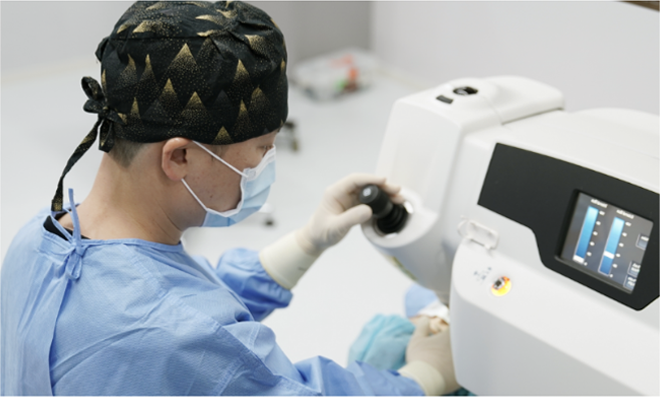
The decision to undergo surgery is made after a thorough
examination and consultation, taking into account the individual's
cause, health, progression, and subjective discomfort. If left untreated
for a long time, the surgical difficulty and risk of complications
increase and the predictability of the outcome also decreases.
Therefore, it is important to do surgery at
the appropriate time at First Eye Center.
Cataract Surgery Process
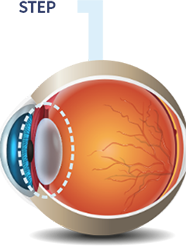
Vision is reduced due
to cataracts.
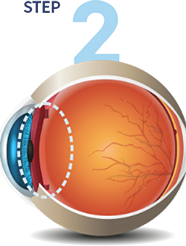
The clouded lens is removed
using an ultrasound device.
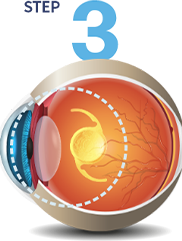
An artificial lens is inserted
to replace the removed lens.
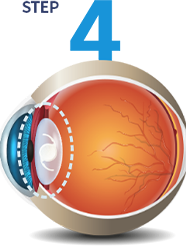
The artificial lens restores
clear, sharp vision.
Solutions for
Optimal Surgical Results
High Accuracy
& Precise Measurements
Advanced eye measurements provide
accurate data
and real-time visualization,
ensuring precise
diagnostics and higher
success rates.
Streamlined Surgical Planning
From lens selection to incision planning,
comprehensive design. Integrated testing
minimizes
errors and supports optimal
decisions.
Image-Guided Surgery
Reduces potential errors during surgery
by using
real-time imaging guidance.
Enhances surgical
precision while considering
individual eye characteristics.
Quick Consultation

Representative Doctor
Yun, Sam-Young
B.A. Seoul National University College of Medicine
Ph.D. Ulsan University College of Medicine
Former Professor at Kangdong Sacred Heart Hospital
Visiting Professor at Harvard & Columbia University

An optimal medical system equipped with cutting-edge medical

A patient-centered, personalized, 1:1 medical system

A primary care physician system dedicated to lifelong care

A safety system that prioritizes thorough sterilization and hygiene

A comfortable and pleasant hospital environment
Our Medical Services
- SMILE / LASIK / LASEK
- EVO ICL Surgery
- Ortho-K (Dream Lens)
- Presbyopia Treatment
- Cataract Surgery
- Retina Care
- Glaucoma Management
- Dry Eye Treatment
- General Eye Examination
- & Consultation
Location
 5th Floor, HJ Tower, 332 Teheran-ro, Gangnam-gu, Seoul


